Sunday Afternoon Tea
Sunday afternoons were for tea with my grandmother. A tradition created to help me cope when my mother, an ER doctor, worked on Sundays in the emergency room.
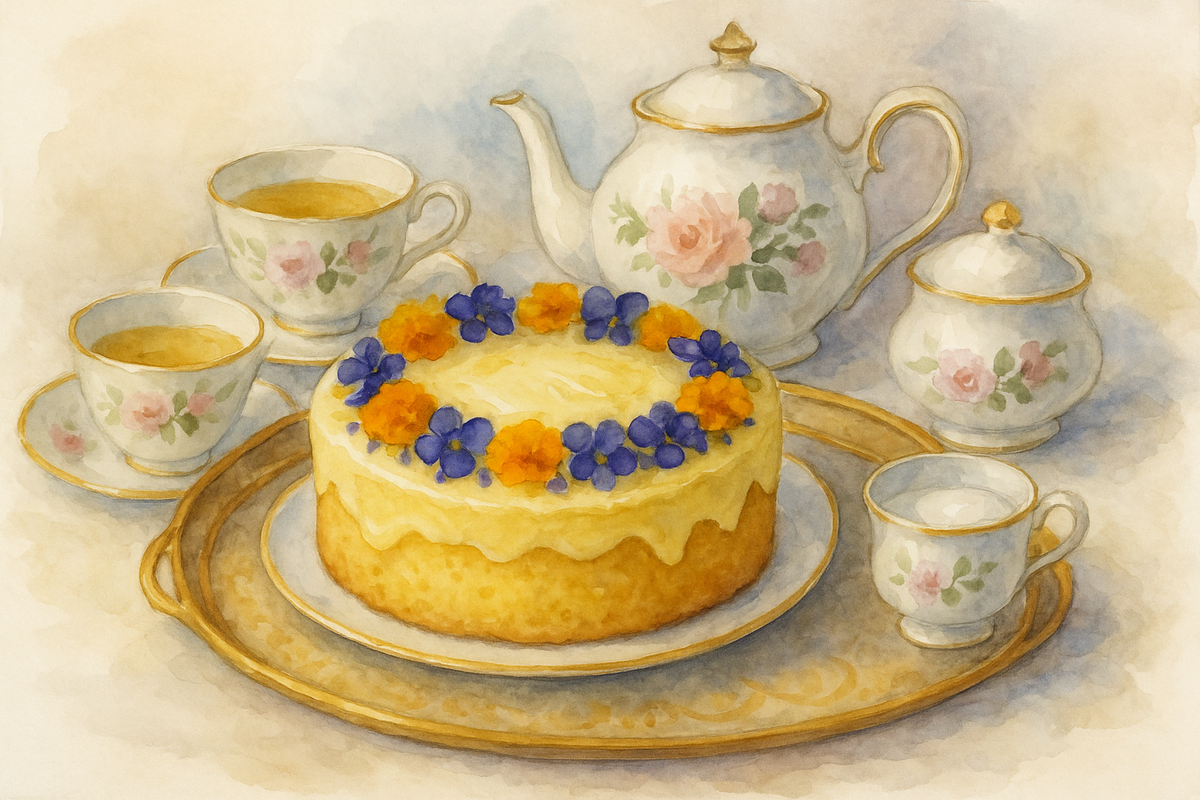
My grandmother would dress us in chiffon dresses with empire waists, pull out a beautiful tea set, and we’d drink tea—Earl Grey for her, and Chamomile for me. She’d make the most spectacular sponge cake. Crumbly, yet soft. Sometimes iced with lemon frosting, other times frosted with chocolate. This tradition continued into my teen and college years. And now that she was 90, I continued the tradition.
It was Sunday afternoon, and I entered the kitchen. My mother stood in her modern kitchen among the cold gleaming stainless-steel appliances, preparing her afternoon protein smoothie. Her lithe, toned body wrapped in black yoga leggings and a purple tank top. I sucked in my stomach, smoothed out the skirt of my dress over my belly roll.
“Sunday tea, again?” she said, disapproving.
“Yes,” I said. I opened the refrigerator, and I pulled out the lemon sponge cake I’d baked earlier.
I turned away. Bit my lip. Focused on placing the cake on the counter next to where my mother stood.
Marigold and violet flower heads circled the edges of the cake like a spring wreath. Lemon icing laced the top. I was pleased with the result, and I held my breath, waiting for a compliment from my mother. Nothing.
Baking was my only talent. I was never going to become a doctor like my mother, nor a teacher like my grandmother. But the chemistry of sugar, flour and eggs made sense to me. I knew I was talented, but my mother saw it as frivolous. Indulgent with no ambition.
“We need to talk about your grandmother, and her situation,” she said, sipping her smoothie.
I sighed. “Not today. Ok. Please.” I said, the tightness in my chest expanding. “Grandma remembered me this morning.”
I yanked open the kitchen cabinet. The Royal Doulton tea set my grandmother cherished sat on the second shelf. My nerves settled seeing the gold-rimmed teacups painted with pink delicate roses.
“If not now, when? You’re indulging in a frivolous activity. You’re doing a disservice to yourself, and to her by doing this every week. You’re holding tea parties when she should be in a special facility.”
Carefully, I placed the tea set on the golden filigreed tray sitting on the counter. My hands shook. It was always the same conversation with her. “She could die any day. What’s the harm?”
“The harm? Lily, are you helping her or running away from yourself? What about your bakery?”
“There is no time for that now. Grandma needs me.” I busied myself with the dishes on the tray.
I glanced at her sideways, “Maybe you can stay and try the cake today,” I said, hoping she’d finally say yes.
She sighed, shaking her head with frustration. “I have to check in on a patient,” she said and walked away.
There were times I wondered how she was the product of my grandmother. The woman who raised me.
I knew there were bad feelings between them. I knew the story. When my mother chose medical school instead of teaching, my grandmother disapproved. To her, her daughter was rising above her station. Showing off.
As I finished setting up the tray with a small bowl of sugar cubes, a memory flashed in my mind.
I was eight, sitting in my room, trying to solve fractions. The problems blurred into one big stew of numbers. Raised voices in the next room distracted me. I abandoned the fractions and pressed my ear to the wall. I heard my grandmother.
“You never find time for your daughter,” she said.
“I do have to see patients.” My mother bit back.
“You have a daughter to see.”
“I don’t have time for this.”
“No, you never have time. Being a doctor is more important than being a mother.”
“I don’t have time, mother. Someone is in critical condition.”
“Run away, like you always do,” my grandmother said.
“I’m leaving,” my mother said, slamming the front door.
My grandmother muttered something I couldn’t make out. Quickly, I sat back at my desk. Trying to make sense of the fractions, but I kept hearing my mother say. “I don’t have time for this.”
A few minutes later, my grandmother entered my room with a wavering smile. Her wet, red-rimmed eyes fell on my homework. “Fractions?”
I nodded.
“Here, I’ll help you,” she said, and sat next to me. Smelling of roses and Bengay.
I pulled out of the memory. I wiped my tears and grabbed the tray with the tea set and headed to the garden.
A light rain was falling, and I walked carefully with the tray. I made my way to the gazebo in the center of the garden where my grandmother sat, waiting.
A soft breeze blew, ruffling the feather on her hat atop her white coiffed hair. The lilac color of her dress had faded, yellowed, and frayed near the edges, like the petals on a once blooming flower.
My grandmother smiled as soon as she saw me coming toward her with the cake.
As soon as I placed it in front of her, she said, “You’re such a good girl, Grace.”
“It’s Lily,” I said and smiled. It felt tight. I swallowed my tears.
Confusion glazed her eyes. Then she looked at me. Recognition.
“Oh Lily, of course.”
Relief washed over me, and I poured the tea.
Handing her the cup, I held onto her hand until she had a good grip.
Then I passed her a slice of cake.
“Did you make the cake?” she asked.
“Yes. Do you like it?”
“It’s delicious,” she said as she took a slow bite. Her hand trembled.
“You’re so talented, Lily. You should open a bakery.”
I said nothing.
The rain tip tapped on the gazebo roof.
I smiled, for now.

